If you’ve ever posted a job opening for a Full Stack Engineer in Bengaluru, Pune, or Gurgaon and received 800 applications in four hours—750 generated by ChatGPT and the remaining 50 demanding a 70% hike with a 90-day notice period—take a deep breath. You’re not alone.
I’ve been in the talent trenches long enough to know that tech hiring in India isn't just recruitment anymore; it’s an extreme sport. You think you've finally closed that elusive backend engineer, you send out the offer letter, celebrate on Slack, and then on Day 89 of their notice period, you get the dreaded WhatsApp message: "Sir/Ma'am, due to personal reasons, I cannot join." (Translation: "A Global Capability Center just offered me 30% more and permanent work-from-anywhere.")
As HR managers, Talent Acquisition leads, and founders navigating India’s volatile tech ecosystem in 2026, the old playbook—post, pray, spam LinkedIn InMails, and screen resumes manually—is officially dead.
Whether you’re staffing a seed-funded startup, expanding an enterprise, or hunting for elite engineers, modern tech recruitment requires intentional intelligence, behavioral rigor, and modern talent solutions.
Here is my no-fluff guide to navigating modern recruitment, retaining your best people, and making your tech hiring engine practically bulletproof.
1. Hiring: How to Stop Burning Cycles & Hire Better
Let’s start with an uncomfortable truth: most companies don't have a talent shortage; they have a filtering and positioning problem.
Slaying the "Hiring Mistakes" Dragon
The biggest hiring mistake I see HR leaders make is the "Unicorn Syndrome"—writing job descriptions that demand an engineer with 5 years of experience in an AI framework invented 18 months ago, deep distributed systems mastery, DevOps fluency, and an IIT pedigree, all for ₹16 LPA.
When you ask for everything, top candidates smell unrealistic expectations and run. Meanwhile, your pipeline gets clogged with keyword-stuffed resumes.
Re-architecting the Job Description (JD)
Job descriptions shouldn't be legal contracts or wishlists; they are your product landing page for talent.
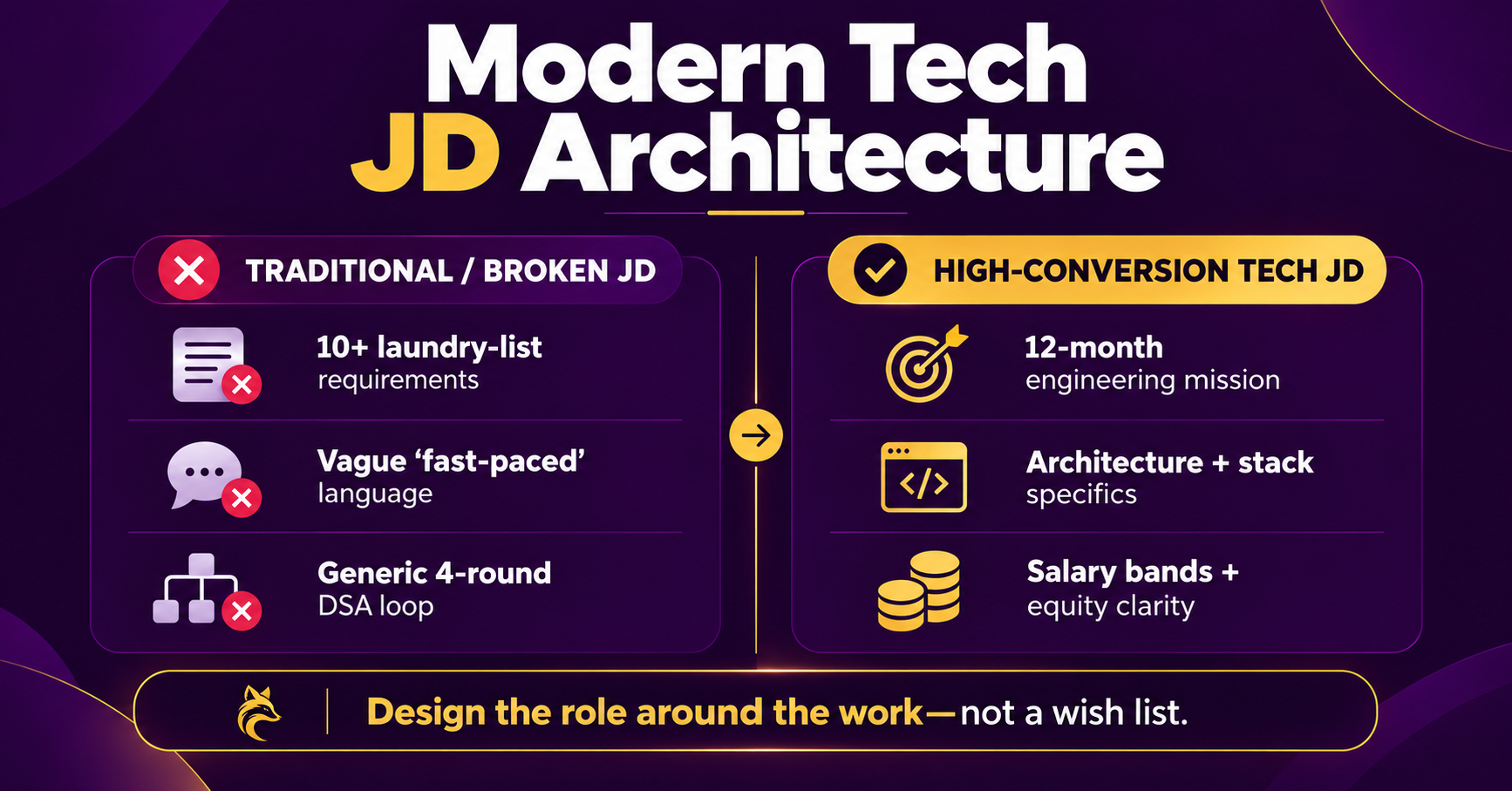
- Kill generic bullet points: Scrap "Must be a dynamic go-getter and team player."
- Sell the technical challenge: State plainly: "You will optimize our payment ingestion pipeline from 4,000 to 25,000 TPS, reducing latency by 40%."
- Be upfront about flexibility & pay: Ambiguity around hybrid expectations or compensation bands is the number one reason high-tier passive talent skips your listing.
Interview Strategies That Don't Insult Engineers
Stop running 6-round DSA (Data Structures and Algorithms) marathons asking senior candidates to invert a binary tree on a whiteboard. Unless you are building an underlying database engine, algorithmic riddles only test who practiced LeetCode yesterday.
- Collaborative Code Reviews: Give them an existing, slightly buggy pull request. Ask: "How would you review this? What security or performance flaws do you spot?" You learn how they think, critique, and communicate.
- Real-world Architecture Whiteboarding: Give them a scaled-down version of an actual engineering bottleneck you faced three months ago.
2. Retention: The War Won (or Lost) in the First 90 Days
"Hiring without a retention strategy is pouring water into a bucket riddled with bullet holes."
Employee turnover in Indian tech isn't always about money. High performers leave managers, ambiguity, and legacy chaos. If your engineering turnover is spiking, your recruitment team will perpetually operate in panic mode.
Why Great Tech Talent Leaves
- The Bait-and-Switch: Interviewed to build bleeding-edge LLM pipelines; assigned to patch legacy Java monolith bugs.
- Invisible Career Ladders: If an engineer cannot see what their title, compensation, and technical scope look like in 24 months, they will look elsewhere.
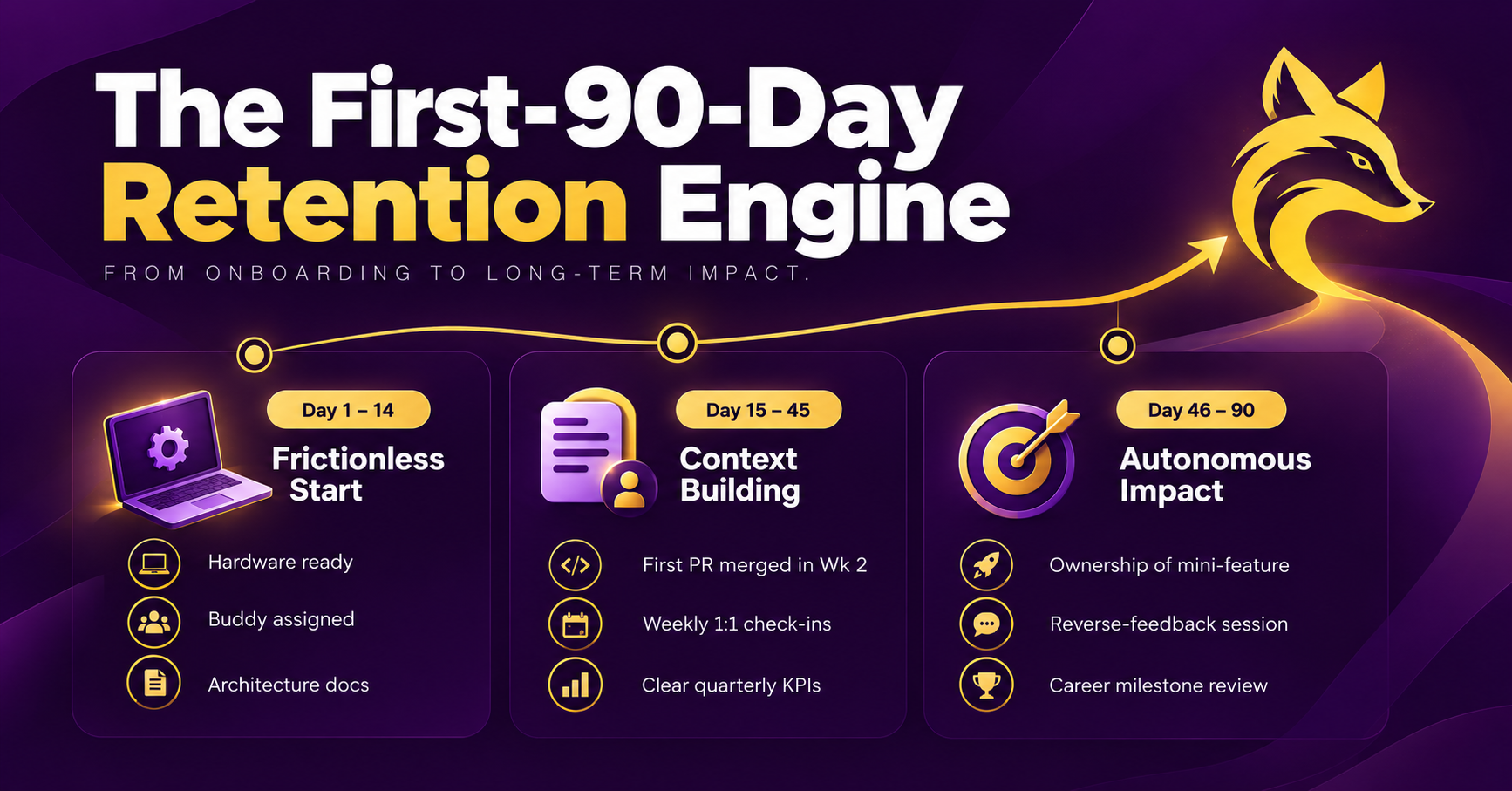
- Friction-Riddled Onboarding: Spending two weeks just getting GitHub permissions and AWS sandbox access destroys enthusiasm immediately.
Engineering High Engagement
Retention starts before Day 1:
- The "Pre-boarding" Bridge: Between offer acceptance and Day 1, keep communication warm. Invite them to team virtual standups or send an unboxing kit. Counter-offers happen in silence.
- The 90-Day Impact Plan: Set explicit, achievable milestones. Week 2: First PR merged. Month 1: Own a small bug patch. Month 2: Lead a minor feature implementation. Month 3: Full autonomy on sprint tickets. When an engineer feels momentum early, turnover drops significantly.
For deep-dive frameworks on organizational growth and retaining top talent, exploring practical guides on modern recruitment solutions can help align your hiring velocity with team stability.
3. Sales Hiring: The Commercial Muscle for Tech Companies
Tech recruitment doesn’t end with developers. If your engineers build the ship, your commercial team sails it into paying waters. In India’s thriving SaaS and B2B tech ecosystems, hiring top-tier Sales Executives and Business Development Executives (BDEs) is often harder than hiring a React engineer.
Why? Because bad salespeople can talk their way through interviews, while good ones are heads-down hitting quota.
How to Evaluate Tech BDEs and Account Executives
A tech salesperson cannot just be charismatic; they need solution fluency. They must understand API integrations, security compliance, and ROI metrics just as well as your pre-sales engineers.
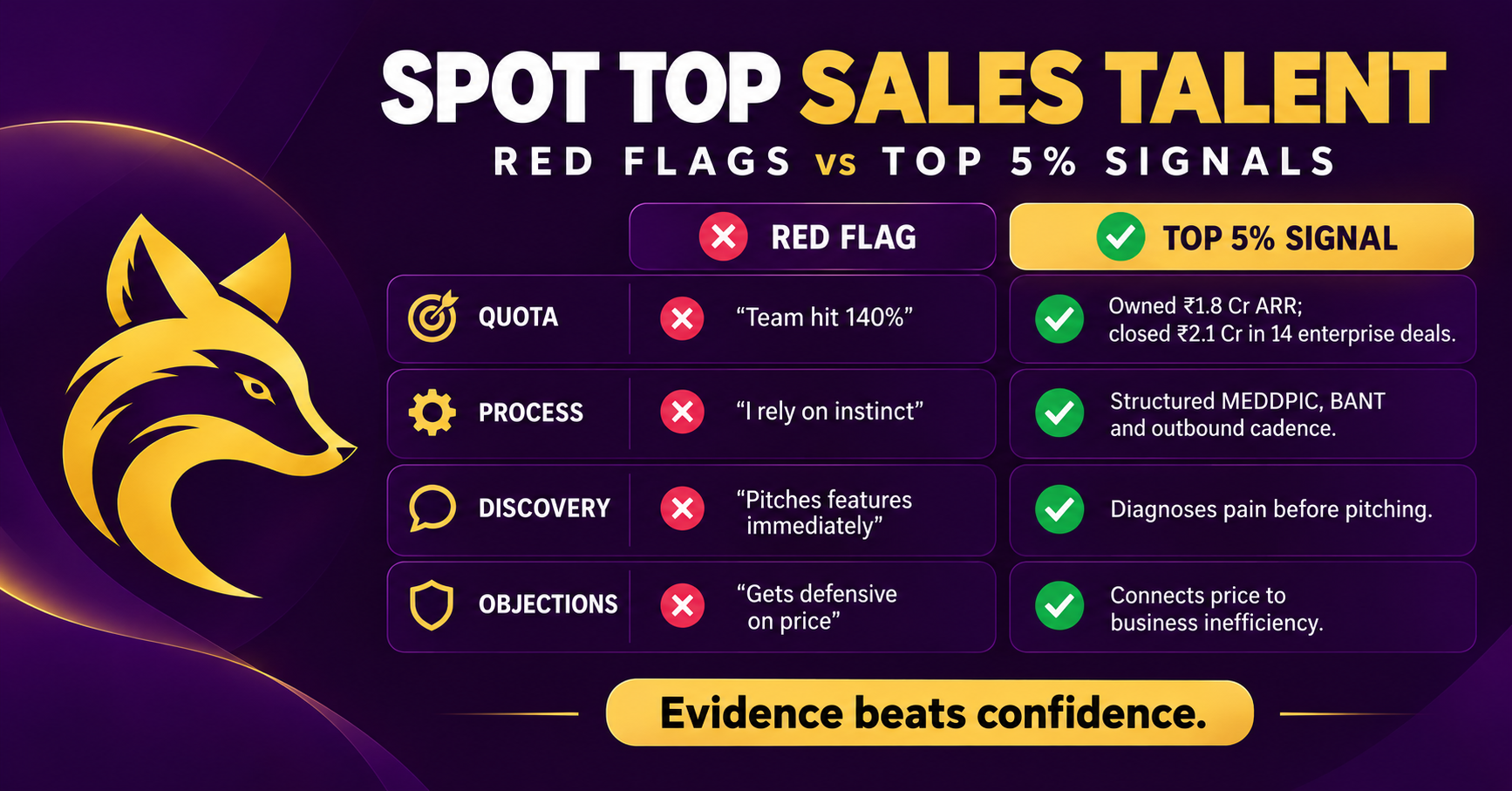
Top Sales Interview Questions to Steal
- "Walk me through the most complex enterprise deal you lost. What broke down, and what would you do differently today?"
- "Sell me our developer platform as if I were a skeptical, security-conscious CTO with zero budget."
- "How do you build pipeline when your inbound leads drop to zero for three weeks?"
If your engineering engine is firing but revenue execution is lagging, you can leverage dedicated avenues like requesting vetted talent to bridge critical sales and technical gaps without exhausting internal bandwidth.
4. Recruitment Intelligence: Metrics That Actually Matter
If you still measure recruitment success purely by “Number of Resumes Sent,” your leadership team isn't getting actionable intelligence. Modern recruitment relies on unit economics.
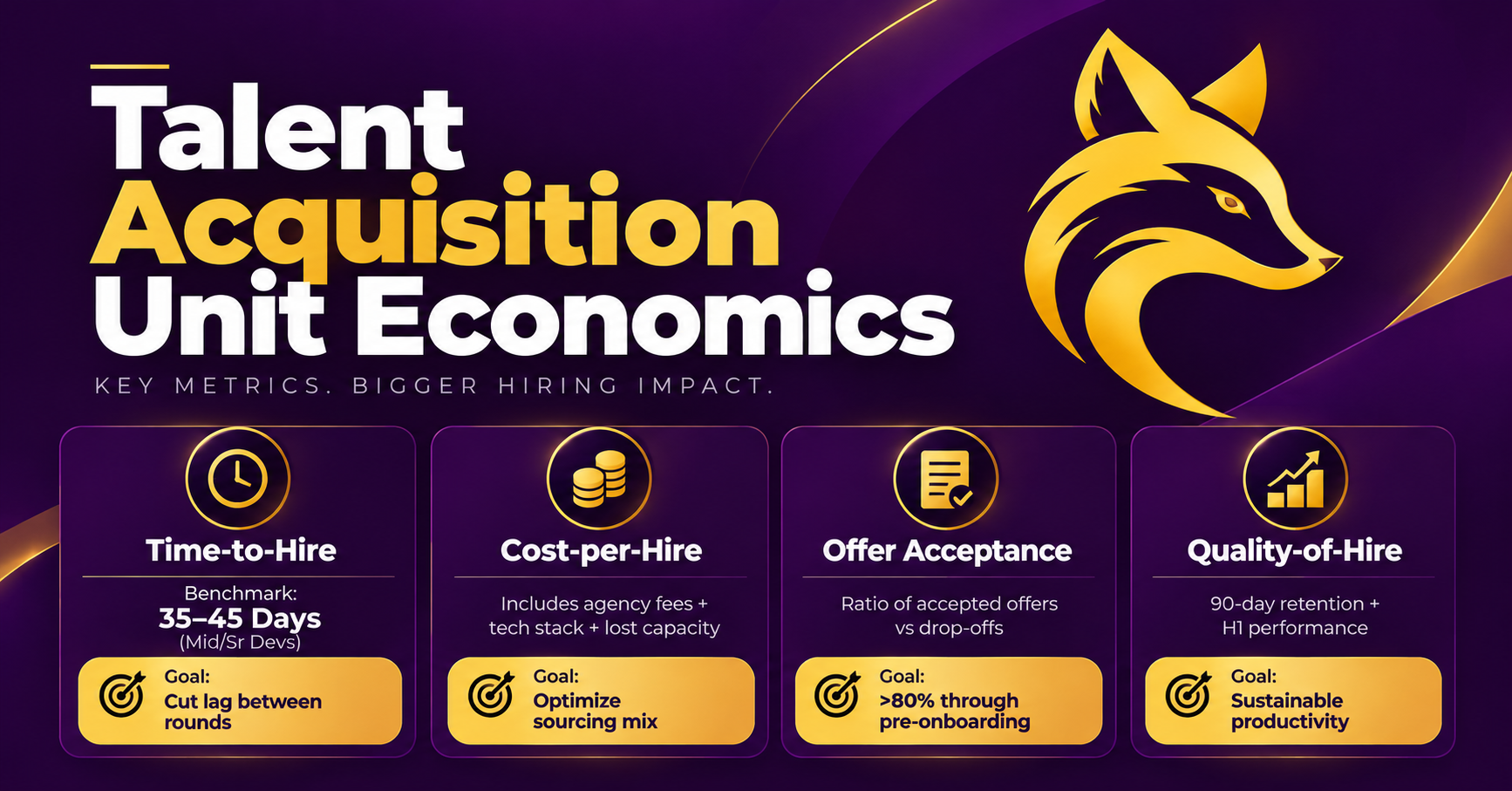
1. Cost-per-Hire (CPH) vs. Cost of Vacancy (COV)
Most Indian HR teams obsess over keeping Agency/SaaS recruitment costs low while ignoring Cost of Vacancy. If an empty Staff DevOps Engineer seat delays your multi-tenant product launch by two months, that vacant desk costs your company significantly more than a placement fee. Calculate total acquisition cost realistically:
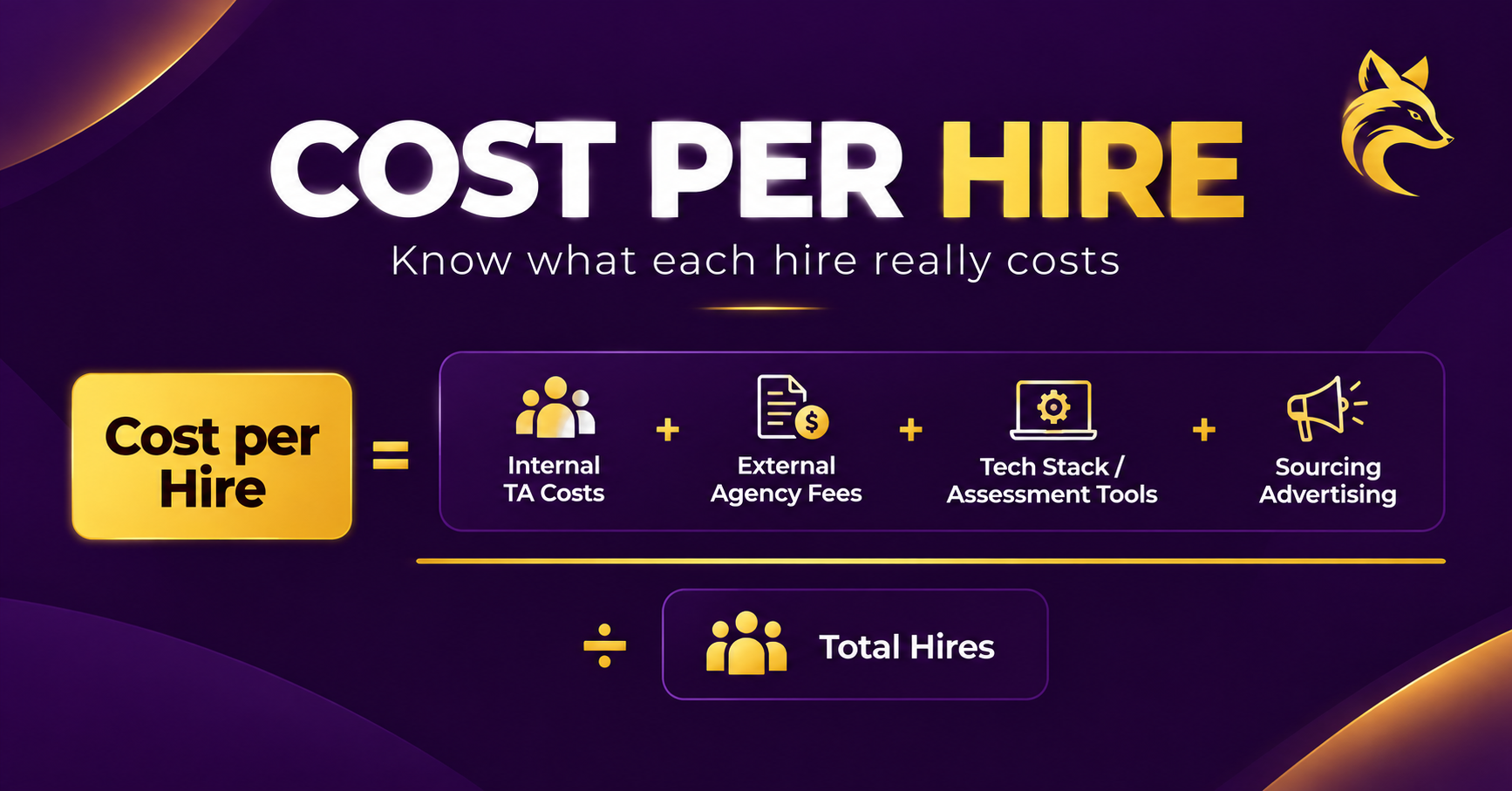
2. Time-to-Hire: The Velocity Trap
In India, the average time-to-hire for mid-to-senior technical roles ranges between 38 and 50 days. However, extended, disjointed interview pipelines are fatal.
If your hiring process takes 4 weeks across 5 rounds, top candidates will accept another offer while you're scheduling the third conversation. Keep your interview turnaround under 10 business days from intro call to offer rollout.
3. Salary Realities in India
We are seeing a notable polarization in compensation. Generalist software roles have stabilized, but deep technical specializations—AI/ML engineers, Cloud Infrastructure Architects, and Platform Security Leads—command considerable premiums, often receiving counter-offers within days.
Keeping tabs on continuous industry intelligence via platforms like VibeShifter Insights gives you the data to price offers accurately before candidates walk away.
5. Future of Work: Surviving AI, Skills-First, and Gen Z
The tech recruitment landscape in India is undergoing its most radical transformation since the IT boom of the late 90s. Here’s what you must adapt to immediately:
AI in Recruitment: The Double-Edged Sword
Generative AI has democratized application volume. Job seekers use automated bots to blast thousands of tailored resumes in seconds, complete with AI-generated take-home assignments.
- The Fix: Integrate AI where it helps (sifting patterns, automated scheduling, talent pool rediscovery), but transition your technical assessments to synchronous pairing, live reasoning, and conversational code debriefs. Verify how a candidate evaluates and edits code, not just how fast they can generate it.
The Skills-Based Hiring Movement
Smart companies are dropping rigid pedigree requirements. Whether an engineer graduated from an elite university or taught themselves through open-source contributions, what matters is capability. Shifting toward practical competency checks increases your talent pool three-fold while boosting workforce diversity.
Welcoming the Gen Z Tech Workforce
Gen Z engineers look at workplaces through a completely different lens. They value:
- Radical Transparency: Clear career progression, honest performance discussions, and no corporate double-speak.
- Purpose and Culture: They want to know why the codebase matters.
- True Flexibility: Forced, rigid 5-day office mandates for software teams are an invitation for attrition, especially when competing with Tier-2 remote talent ecosystems across India.
How to Solve This Problem: Your 30-Day TA Action Plan
If you want to transform your technical talent pipeline this quarter, avoid trying to change everything at once. Use this sequential execution blueprint:
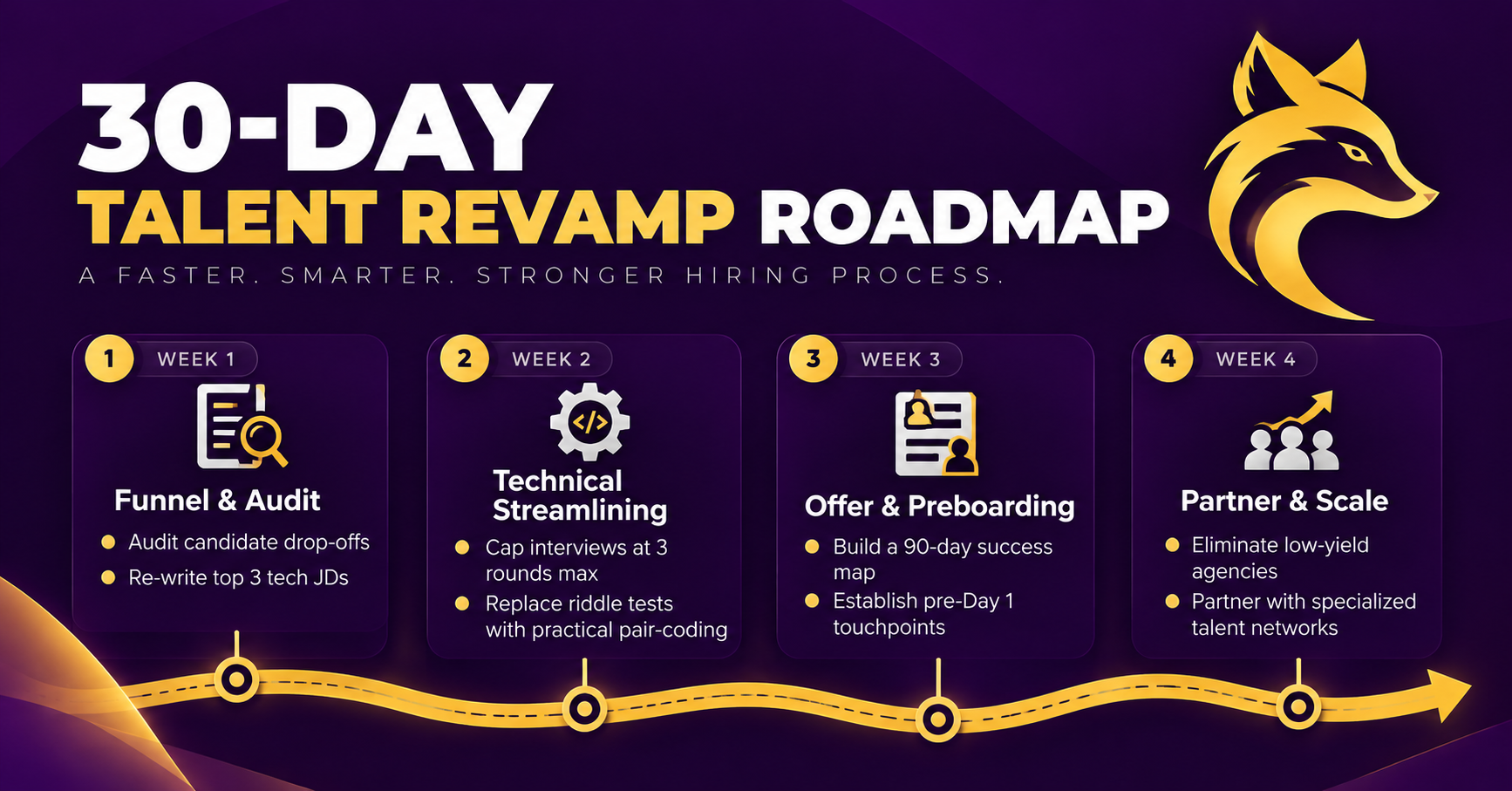
The HR Manager's Tech Hiring Checklist
- [ ] JD Refresh: Eliminate 30% of unnecessary requirements; specify stack challenges clearly.
- [ ] Speed Guardrail: Cap interview cycles at a maximum of three core rounds.
- [ ] SLA Commitment: Promise feedback to candidates within 48 hours of any round.
- [ ] Pre-Boarding Protocol: Establish weekly communication touchpoints during candidate notice periods.
- [ ] Market-Calibrated Bands: Benchmark salaries quarterly against active industry standards.
- [ ] Strategic Sourcing Mix: Combine internal referral networks with specialized, verified talent partners.
Need Help Modernizing Your Talent Pipeline?
Building an agile, high-performing technical team in India requires more than conventional job boards; it takes a strategic hiring architecture. That’s where modern platforms like VibeShifter come into play.
- Looking to scale your engineering, product, or sales teams with vetted professionals? Use Request Talent
to hire.
- Are you a high-impact technical or commercial professional looking for your next challenge? Submit Your Profile
to get hired.
We'll reach out privately to understand your requirements and connect suitable opportunities with the right people.
handle alternative points of view.