
Let me guess.
You’ve got a booming creator brand, a private membership community, or a high-ticket subscriber funnel that is practically on fire. People are sliding into the direct messages every single minute. They’re curious, they’re asking questions, they’re waving their credit cards in the air—and your response time is sitting at a tragic sixteen hours because you’re busy trying to film content, edit videos, manage operations, or frankly, sleep like a regular human being.
So you decide to become a talent buyer. You think to yourself: “I’ll just hop onto a freelance marketplace, find a sharp conversational sales specialist, hand over the inbox keys, and watch the recurring revenue roll in while I sip iced lattes.”
Then reality hits you like a cold splash of water.
You post a job on a generic platform, and within twenty minutes, your inbox is flooded with 114 robotic proposals. Half of them start with "Dear Respected Hiring Manager Sir," and the other half are copy-pasted ChatGPT scripts promising they can "increase synergy by 300%." You interview three candidates: one has the conversational charisma of a damp cardboard box, another doesn't understand the difference between high-ticket creator sales and spamming discount links, and the third vanishes into thin air on day four.
If you’re nodding your head right now, take a deep breath. You aren’t crazy, and your standards aren’t too high.
The truth is, hiring for private chat roles in the creator economy is one of the most misunderstood recruitment challenges on the internet today. Selling inside private creator chats (whether on Telegram, Whop, Skool, Instagram DMs, Patreon, or private paid communities) isn’t data entry. It isn’t traditional customer support. It is empathy-driven, real-time conversational selling.
In this guide, I’m breaking down the entire landscape. We will look at where talent buyers actually find elite chat closers, compare the leading marketplaces, dissect the math behind hiring and retention, and build you an bulletproof hiring engine so you never waste another dollar on the wrong hire.
Grab a coffee. Let’s get into the trenches.
1. The Marketplace Showdown: Where Should Private Chat Buyers Actually Look?
When you’re buying talent for private chat positions, you aren’t just buying "hours logged on a screen." You are buying brand reputation, tone of voice, psychological intuition, and sales conversion velocity.
Let’s evaluate the four main avenues where operators search for creator chat professionals, looking at the real trade-offs no one puts on their landing pages.
The Big Four Marketplace Categories
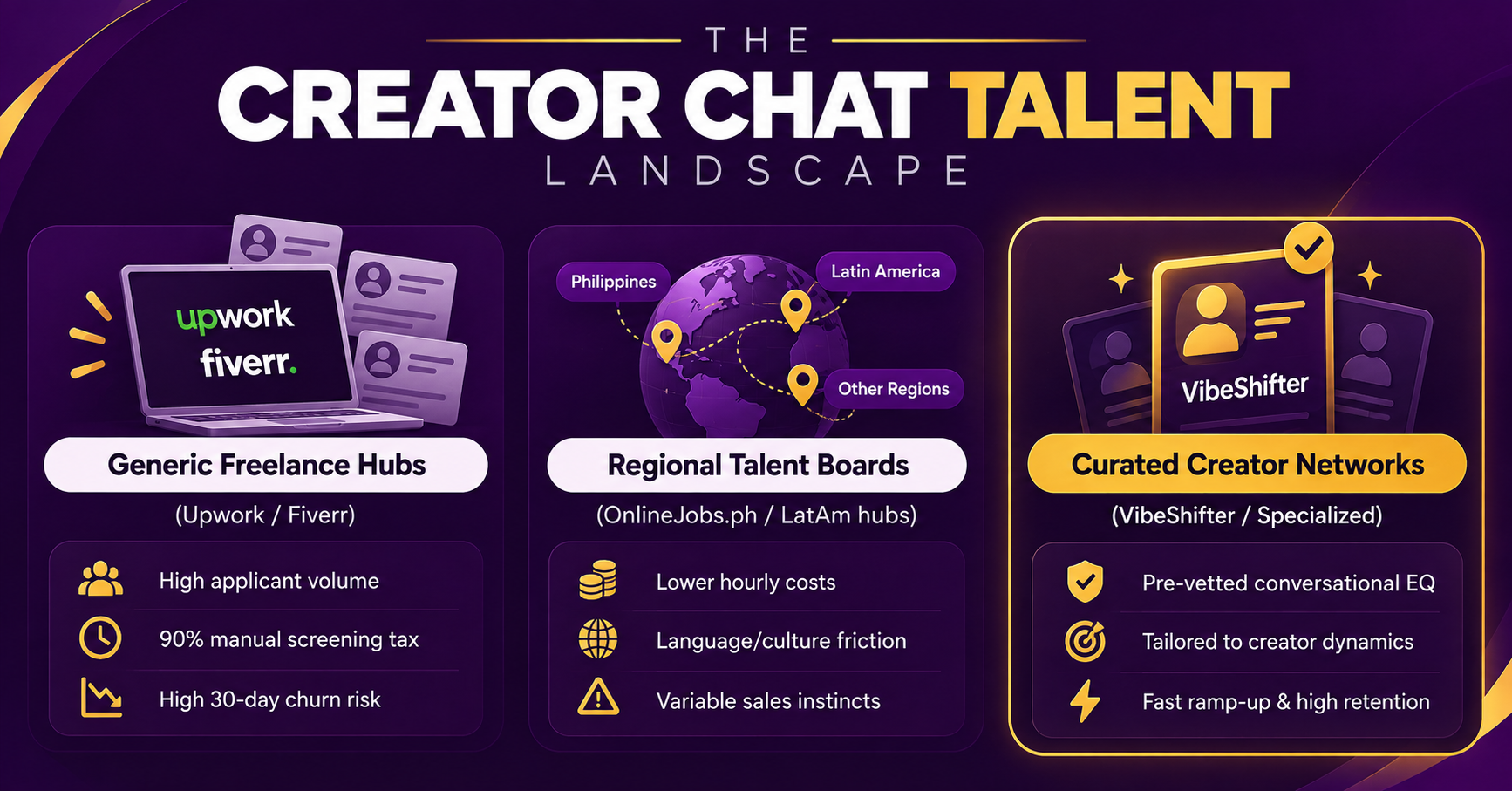
1. Open Freelance Giants (Upwork, Freelancer, Fiverr)
- The Good: Massive global pool. Escrow payment systems keep financial transactions safe. If you need a task done in twenty minutes, you will find someone willing to do it.
- The Bad: The signal-to-noise ratio is brutal. Because anyone can apply with a single click, you spend 80% of your hiring time playing digital trash collector, sifting through automated bot applications.
- The Chat Reality: Most candidates on these platforms are trained in legacy ticketing systems (Zendesk, Freshdesk) or rigid outbound cold email. When placed inside a high-intimacy creator chat, they sound like an insurance automated hotline.
2. Regional Arbitrage Boards (OnlineJobs.ph, Latin American Talent Hubs)
- The Good: Unbeatable cost-to-rate ratios. Outstanding work ethic and incredible operational loyalty when managed well.
- The Bad: Cultural nuance and conversational idioms can take months to calibrate. If your creator audience uses hyper-current internet slang, meme culture, or fast-paced Western humor, a literal interpretation can kill a high-ticket DM sale instantly.
- The Chat Reality: Fantastic for administrative and operational back-office support; requires substantial upfront sales coaching if you expect them to run unscripted, consultative DM sales conversations.
3. Shadow Discord & Telegram Groups
- The Good: Raw, native internet operators who live and breathe creator culture. They understand communities, drops, paywalls, and subscriber dynamics instinctively.
- The Bad: Total Wild West. Zero contracts, zero accountability, zero background checks, and an alarming rate of "ghosting." If an unverified operator runs off with your account access, you have zero recourse.
- The Chat Reality: High upside, catastrophic downside risk.
4. Curated Modern Talent Matchmakers (The VibeShifter Model)
- The Good: Candidates are pre-filtered not just on basic grammar, but on conversational EQ, pacing, empathy, and sales aptitude. The marketplace does the heavy lifting of vetting so you only speak with operators who already understand modern creator ecosystems.
- The Bad: Smaller, highly targeted talent pools compared to the millions of generic resumes floating around the open web.
- The Chat Reality: Built specifically for operators who value time over resume-sorting. You skip the 20-hour screening marathon and step directly into structured trials with candidates who understand how modern private chats convert.
2. Hiring Right: How to Build a Creator Chat Team Without Losing Your Mind
Let’s talk about the biggest hiring mistake I see smart creators and agencies make every single week: hiring for speed instead of conversational emotional intelligence (EQ).
When you hire a developer, you test their code. When you hire a video editor, you watch their reel. But when people hire private chat specialists, what do they do? They read a PDF resume that says "Hardworking, detail-oriented professional with 3 years of customer experience."
"
Hiring a conversational closer based purely on a resume is like buying a used sports car without turning on the engine. Sure, the paint job looks sleek, but the transmission might blow up the second you pull out of the driveway."
The Deadly Hiring Mistakes You Must Dodge
- The "Script-Robot" Trap: Handing a new hire a 30-page objection-handling document and expecting them to copy-paste their way to six figures. Buyers spot scripted answers in three seconds. In private chats, authenticity is the currency.
- The "Passive Order Taker" Flaw: Hiring someone who waits for the fan or client to ask to buy. A true chat professional doesn't wait; they ask provocative, insightful diagnostic questions that lead naturally to the purchase.
- The Uncalibrated Tone Disaster: If the creator’s tone is casual, witty, and understated, and your chat specialist sounds like a corporate vice president sending an internal memo, trust is broken permanently.
The Job Description That Filters Out 90% of Time-Wasters
Stop posting generic JDs. If your job description sounds boring, the talent you attract will be boring. Here is a battle-tested structure you can adapt right now:
Title: Conversational Sales Specialist (Creator Private Community / DMs)Location: Remote (Flexible / Dedicated Shift)About Us:We run [Name of Community/Brand]. We speak with real people who are passionate about [niche/topic]. We don’t do sleazy high-pressure sales, and we never spam. We build deep, genuine relationships that lead into our premium memberships and products.What You Will Do:- Manage inbound private messages across [Platforms: e.g., Telegram, Skool, DMs].- Guide prospects through diagnostic conversations: understand their goals, identify their roadblocks, and see if our offerings are a genuine fit.- Maintain our unique brand voice: witty, grounded, empathetic, and sharp.- Log conversational insights and track conversion rates daily.Who You Are:- You have high emotional intelligence: you can read between the lines of a two-sentence message.- You understand that listening closes more deals than talking.- You are comfortable working independently in a fast-paced, remote environment.- You have flawless written English and understand modern internet culture.To Apply:Do not send a generic cover letter. Reply with:1. Two sentences on why you prefer direct chat over phone calls.2. If a prospect messages: "Hey, love your stuff, but your community is way too expensive for me right now," what is your exact first response to keep the conversation alive?
Notice what that last line does? Anyone who uses an automated bot or copy-paste template will completely miss question number two. You immediately delete those applications and save yourself five hours of headache.
3. Sales Hiring: The Nuance of Conversational DM Closers vs. Traditional BDEs
A lot of founders coming from traditional SaaS or corporate backgrounds make a fatal assumption: "I’ll just hire a B2B Business Development Executive (BDE) or an outbound SDR to run my creator chats."
Do not do this unless you want to incinerate your audience’s goodwill.
Why Enterprise Sales Tactics Crash and Burn in Creator DMs
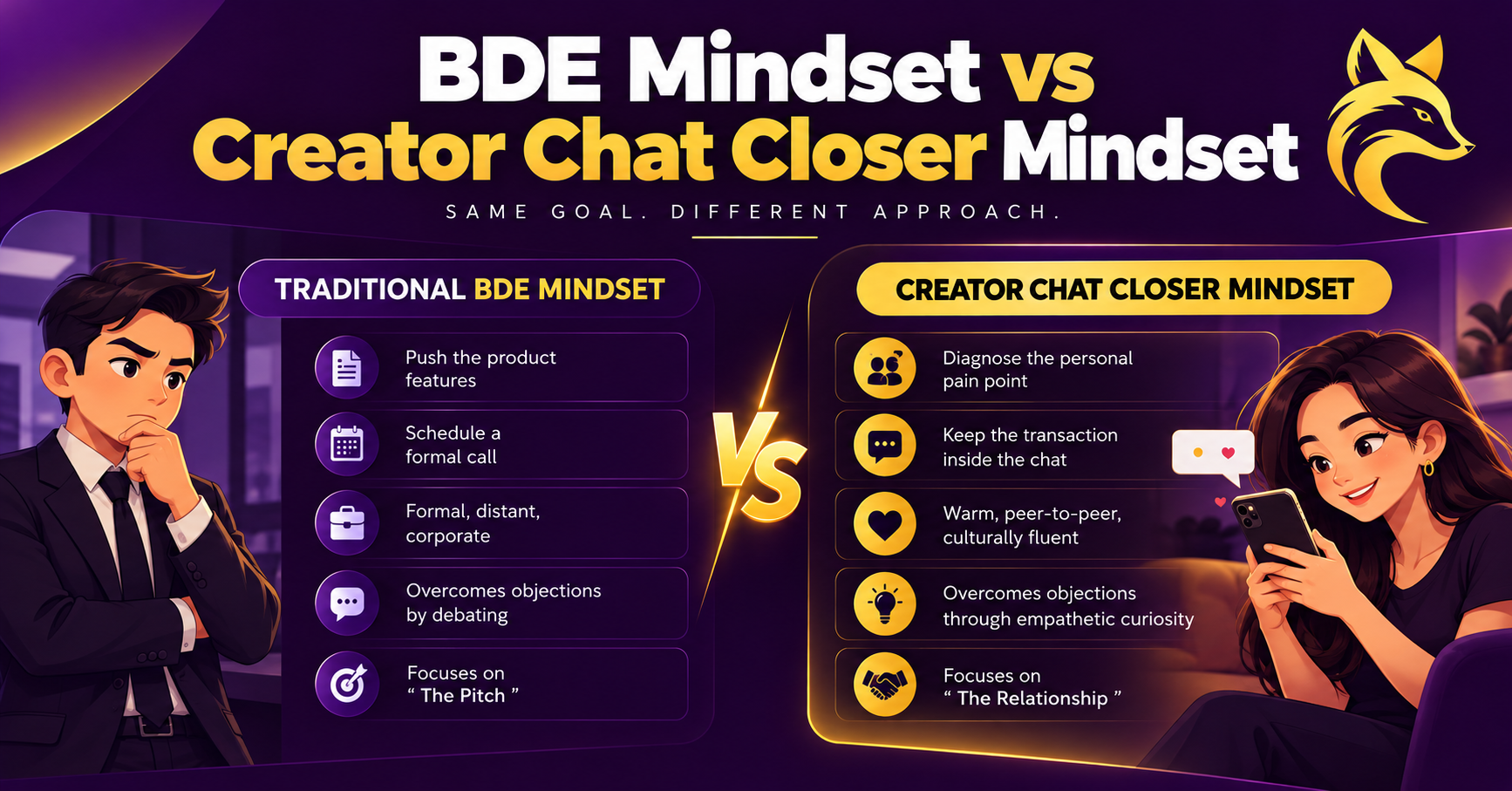
In enterprise sales, you use frameworks like BANT (Budget, Authority, Need, Timeline) and schedule 30-minute Zoom calls. You write formal follow-ups. You use corporate jargon like "circling back" and "touching base."
In creator chats, if you say "I'd love to circle back on our synergies," the user will immediately screenshot your message, post it on X (Twitter), and clown you for the rest of the week.
Private chat selling is intimate, peer-to-peer commerce. It operates under an entirely different psychological framework:
- Micro-Pacing: Sending three short, digestible messages rather than one overwhelming wall of text.
- The "Curious Friend" Stance: Asking open-ended diagnostic questions instead of pitching benefits right out of the gate.
- Voice-Note Weaponry: Knowing precisely when to drop a 15-second, personalized voice note to humanize the screen and eliminate skepticism.
3 Unconventional Interview Questions to Uncover True DM Closers
When you are interviewing for this role, throw out the generic "What is your greatest weakness?" questions. Use these instead:
- "A long-time follower messages: 'I’ve been watching your content for six months. I really want to join your private program, but I’m terrified of failing again.' How do you respond?"
- What to look for: Do they immediately pitch a discount code? (Fail). Or do they validate the fear, ask what happened in their past attempts, and create a safe emotional space? (Hire).
- "How do you handle a prospect who sends five angry messages in a row because a technical link was broken?"
- What to look for: You need radical de-escalation skills. Look for candidates who separate the customer's frustration from their own ego.
- "Show me the last meme you shared with a friend."
- What to look for: This isn't just a funny icebreaker. It shows whether they actually understand contemporary digital culture and communicate naturally like an internet native.
4. The 90-Day Retention Crisis: Why Chat Talent Leaves (And How to Keep Them)
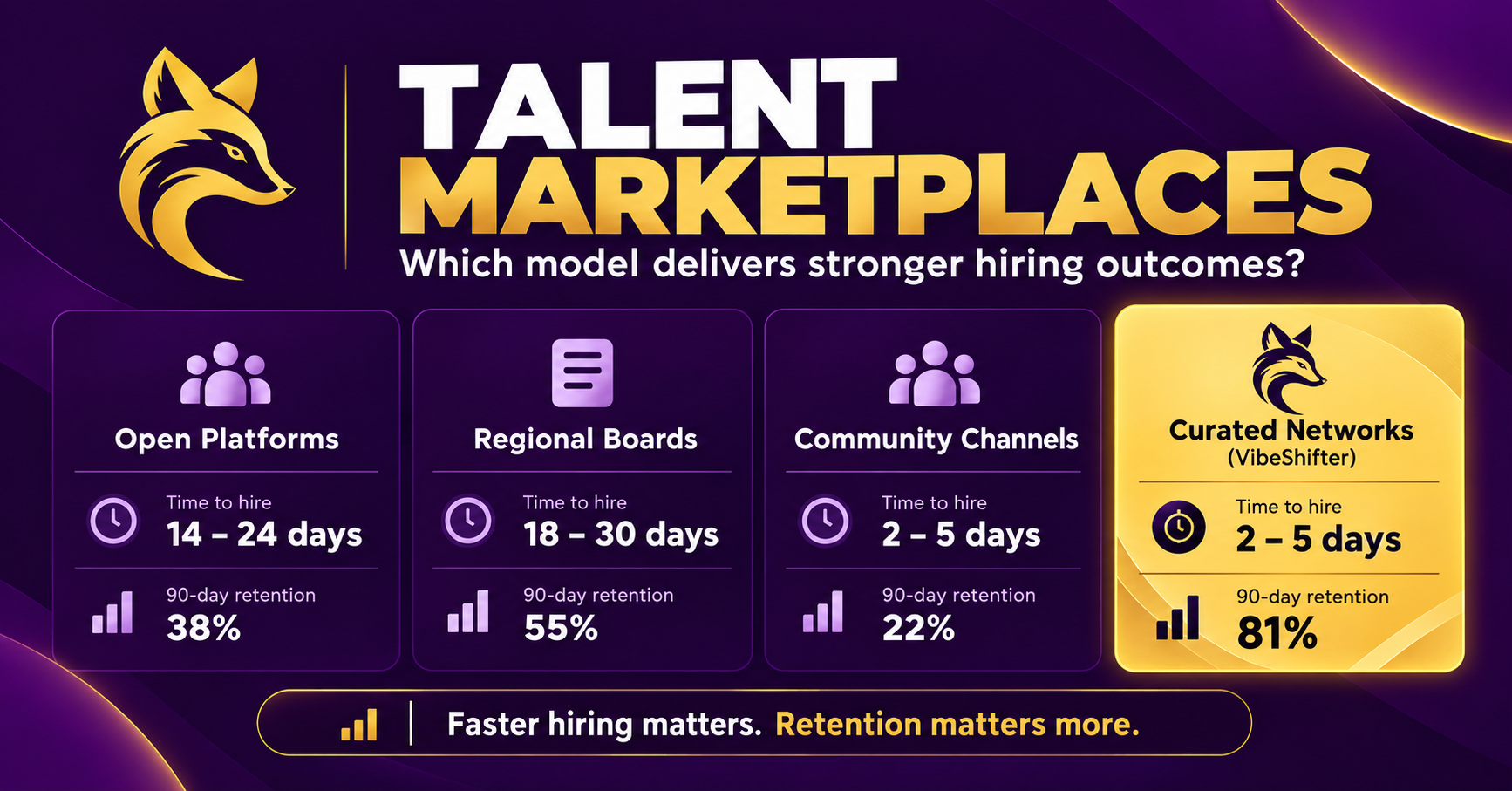
Here is a staggering industry reality: Over 60% of chat sales specialists in the creator sector quit or get replaced within their first 60 to 90 days.
Why? Because operators treat them like disposable cogs rather than strategic revenue partners.
Think about the psychological toll of this job: A private chat operator spends eight hours a day managing emotional demands, handling objections, absorbing customer frustrations, and maintaining high energy behind a keyboard. If you don't build an operational structure that supports them, burnout is guaranteed.
The Three Drivers of Early Turnover
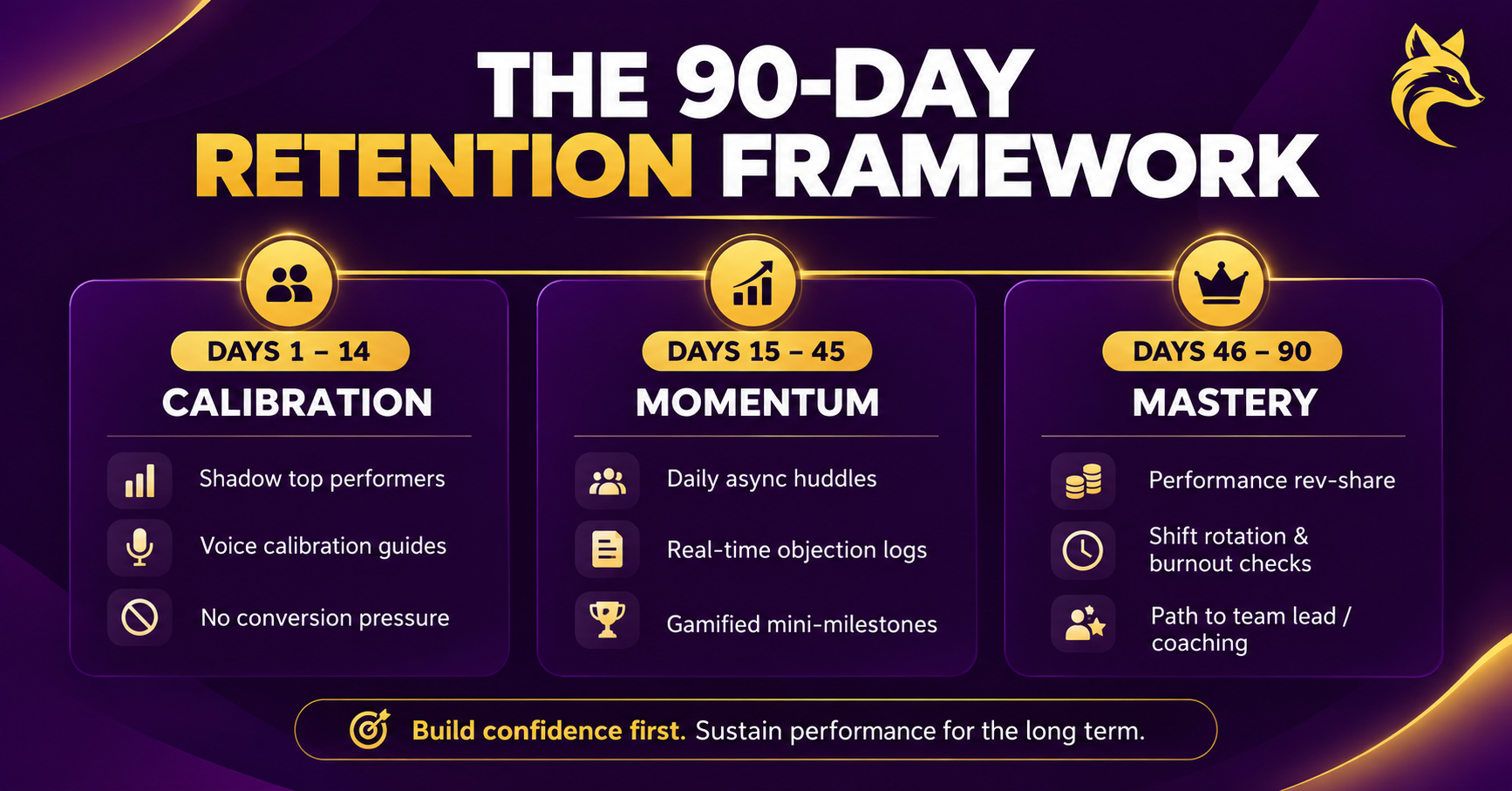
- Vague Voice Guidelines: You tell your new hire to "sound like me," but you haven’t documented what you sound like. They guess, they get it wrong, you get frustrated, they feel anxious, and the downward spiral begins.
- Feast-or-Famine Compensation: Offering a pure commission structure with zero base pay during the onboarding ramp. If a rep spends three weeks learning your audience and makes $200 because the pipeline was slow, they will leave for a stable base-salary role elsewhere.
- Operational Isolation: Leaving your remote chatters alone in an inbox with zero team culture, feedback, or appreciation. Isolation breeds disengagement, and disengagement destroys closing rates.
The First-90-Days Retention Playbook
- The Voice Bible: Create a 2-page document containing actual screenshots of your best interactions. Label them: "Say this, not that." Include your favorite idioms, words you hate, and how you punctuate sentences (do you use exclamation points or periods? lowercase or uppercase?).
- The Hybrid Pay Structure: Combine an hourly security floor with an aggressive performance upside. For example: a guaranteed $15–$25/hour base plus 5–10% of closed DM revenue. This gives your talent the psychological safety to focus on quality conversations without worrying about paying rent.
- The Daily "Wins & Roadblocks" Slack/Discord Thread: A ten-minute daily habit where your chat team drops their highest-converting message of the day and their toughest unclosed objection. Celebrate the wins publicly; solve the objections collaboratively.
5. Recruitment Intelligence: Benchmarks, Real Salaries, and Hidden Costs
Let’s talk brass tacks. How much does building a high-performing private chat sales team actually cost in 2026?
Too many founders look exclusively at the hourly rate and ignore the Cost-Per-Hire (CPH) and Opportunity Cost of Churn. Hiring an unqualified $6/hour rep who burns twelve warm leads a week is infinitely more expensive than hiring a $30/hour closer who converts those same leads into $1,500 recurring clients.
2026 Real-Time Market Compensation Benchmarks
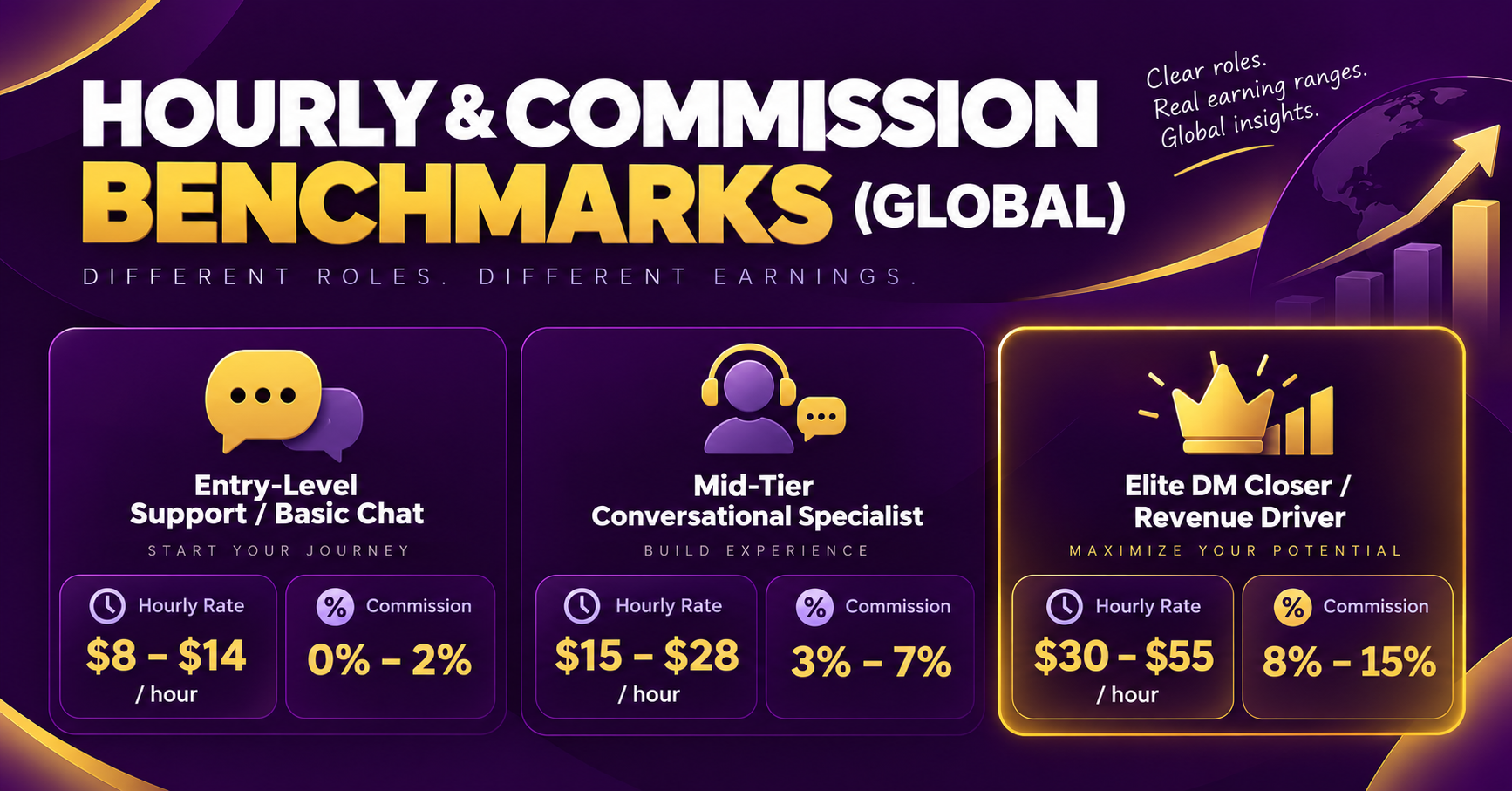
- Entry-Level Conversational Rep: Best for basic triage, qualification, answering recurring questions, and routing high-value prospects. Typically commands $8 to $14 per hour with minimal commission.
- Mid-Tier Conversational Specialist: Fully autonomous. Understands nuanced objection handling, runs structured diagnostic frameworks, handles refunds, and closes mid-ticket offers ($200–$1,000). Commands $15 to $28 per hour plus 3–7% performance rev-share.
- Elite High-Ticket DM Closer: World-class consultative ability. Can sell $3,000 to $10,000 programs directly inside a messaging thread over a 48-hour conversational arc. Commands $30 to $55+ per hour or a modest base with 10–15% collected revenue share.
The True Cost of a Bad Chat Hire
Let’s look at the real financial damage of hiring the wrong person through an unvetted marketplace:
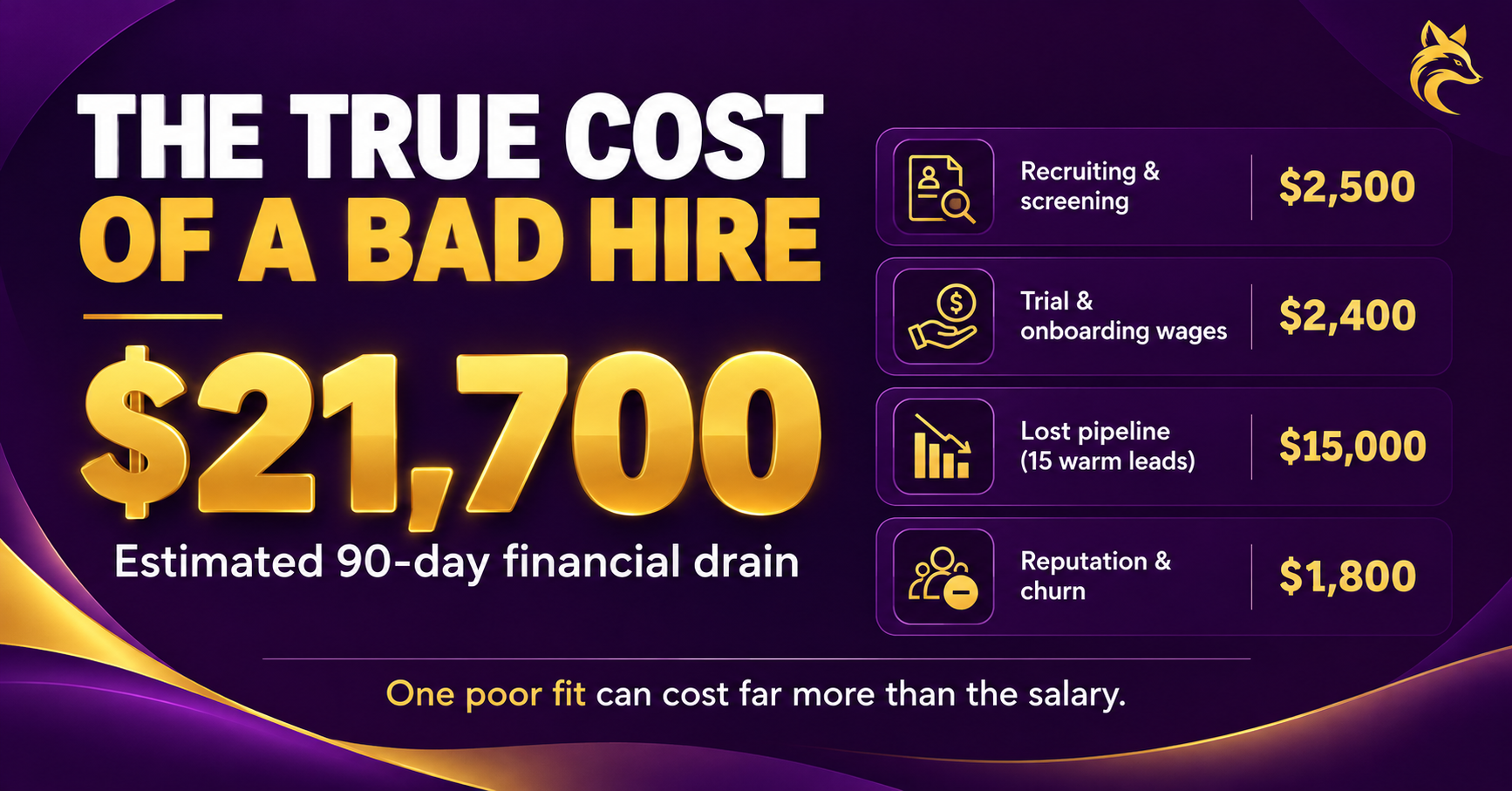
When you look at recruitment through this lens, paying for specialized vetting or using a dedicated matchmaking service like VibeShifter isn’t an expense—it is cheap insurance against pipeline destruction.
6. The Future of Work: AI, Gen Z Talent, and Skills-Based Hiring
The creator chat landscape is moving faster than legacy hiring systems can keep up with. If you are hiring the same way companies hired in 2018, you are setting yourself up for failure. Three massive shifts are redefining how private chat buyers operate:
1. The Death of the "Full AI Replacement" Fantasy
Every six months, a new AI tool launches claiming it will "replace all human chatters with one click." And every six months, creators who deploy fully automated bots across their private communities watch their churn spike through the roof.
Why? Because private chat buyers are buying human connection.
The future isn't AI replacing humans; it's AI-empowered humans. Elite chat operators now use AI behind the scenes as a lightning-fast research copilot: pulling up client history, summarizing past interactions, and suggesting tone options. But the final message, the timing, the empathy, and the psychological intuition? That remains 100% human.
2. Gen Z and the New Talent Dynamic
The best conversational talent online right now belongs to the digital-native Gen Z demographic. They grew up communicating through DMs, Discord, and short-form video. Their natural text speed, meme fluency, and conversational pacing are unmatched.
However, managing Gen Z talent requires a shift in leadership:
- They don't respond to corporate hierarchy or micro-management.
- They prioritize autonomy, transparency, and clear boundaries.
- They demand authentic alignment with the creator they are representing. If they don't believe in your product, their closing rate will collapse.
3. Skills-Based Hiring Has Won
Resumes are officially dead in the creator economy. Nobody cares which university a candidate attended or whether they have a degree in business communication.
What matters is demonstrated capability:
- Can you defuse an upset customer in two texts?
- Can you spot the difference between a tire-kicker and a serious buyer?
- Can you write with authentic warmth without using exclamation marks after every single word?
Smart operators test for these skills before they ever look at an employment history document.
How to Solve This Problem: Your Step-by-Step Action Plan
If your DMs are overflowing and you need to get the right person into your inbox without burning weeks of your life, follow this 14-day execution blueprint.
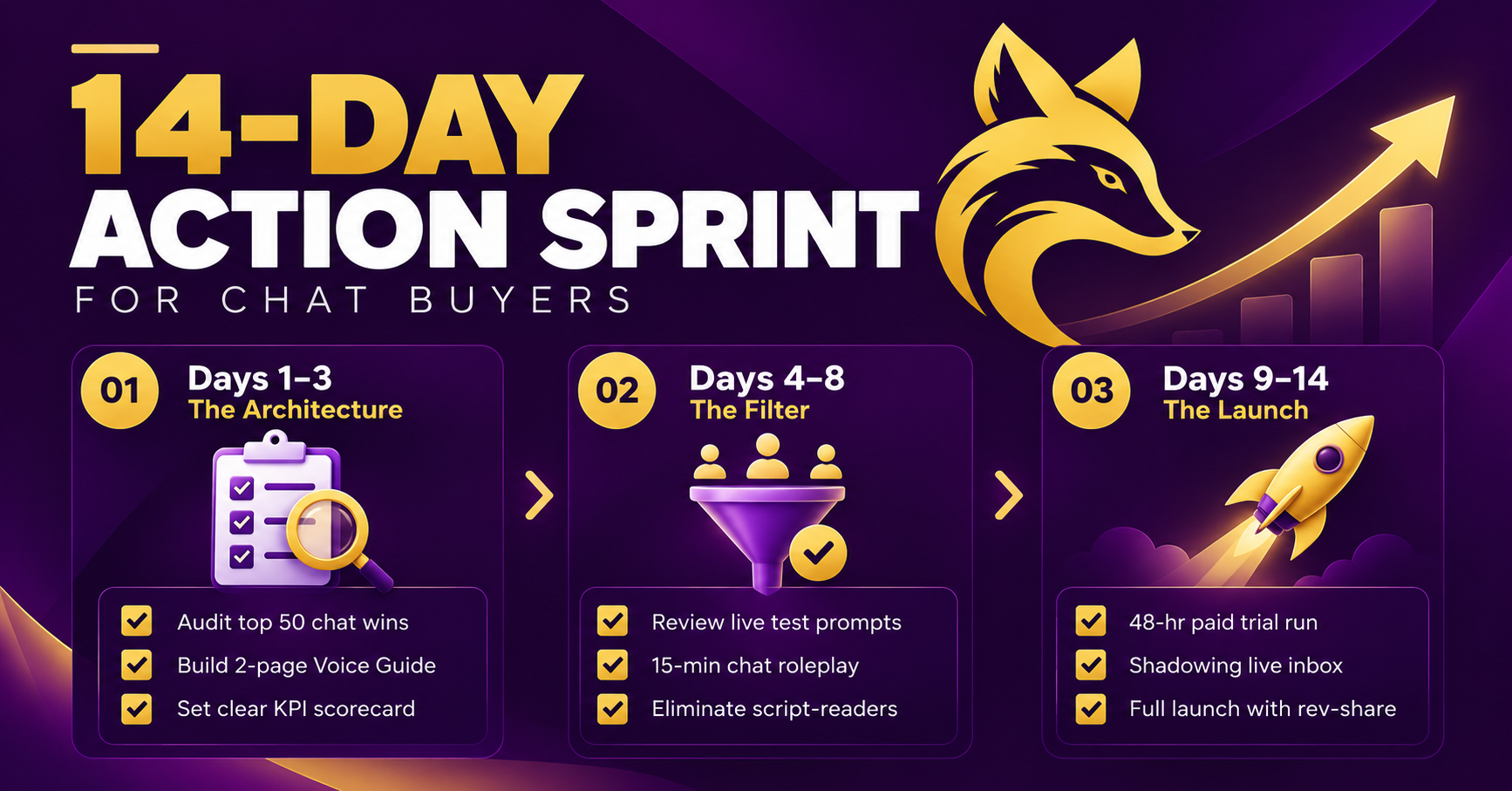
The Pre-Hiring Checklist
- [ ] Document Your Voice: Pull 20 screenshots of your best, most authentic chat conversations into a single document.
- [ ] Define the Offer Boundaries: What is the chat operator allowed to offer? Can they give discounts? Can they grant payment plans? Clarify limits upfront.
- [ ] Establish Your Core Metrics: What does success look like? (e.g., < 15-minute response time during active shifts, 22% conversion on qualified inbound inquiries).
- [ ] Select Your Source: Decide whether you have the 30 hours required to sift through open marketplaces or if you need a specialized network to hand you pre-vetted operators.
The 14-Day Execution Plan
- Days 1–3: Pipeline Prep. Define your compensation model (Base + Commission). Build your application form with a mandatory real-time text prompt to eliminate bots.
- Days 4–7: Targeted Sourcing. Post your specialized JD or submit your custom search request through a dedicated talent network. Gather your shortlist of the top 3 candidates.
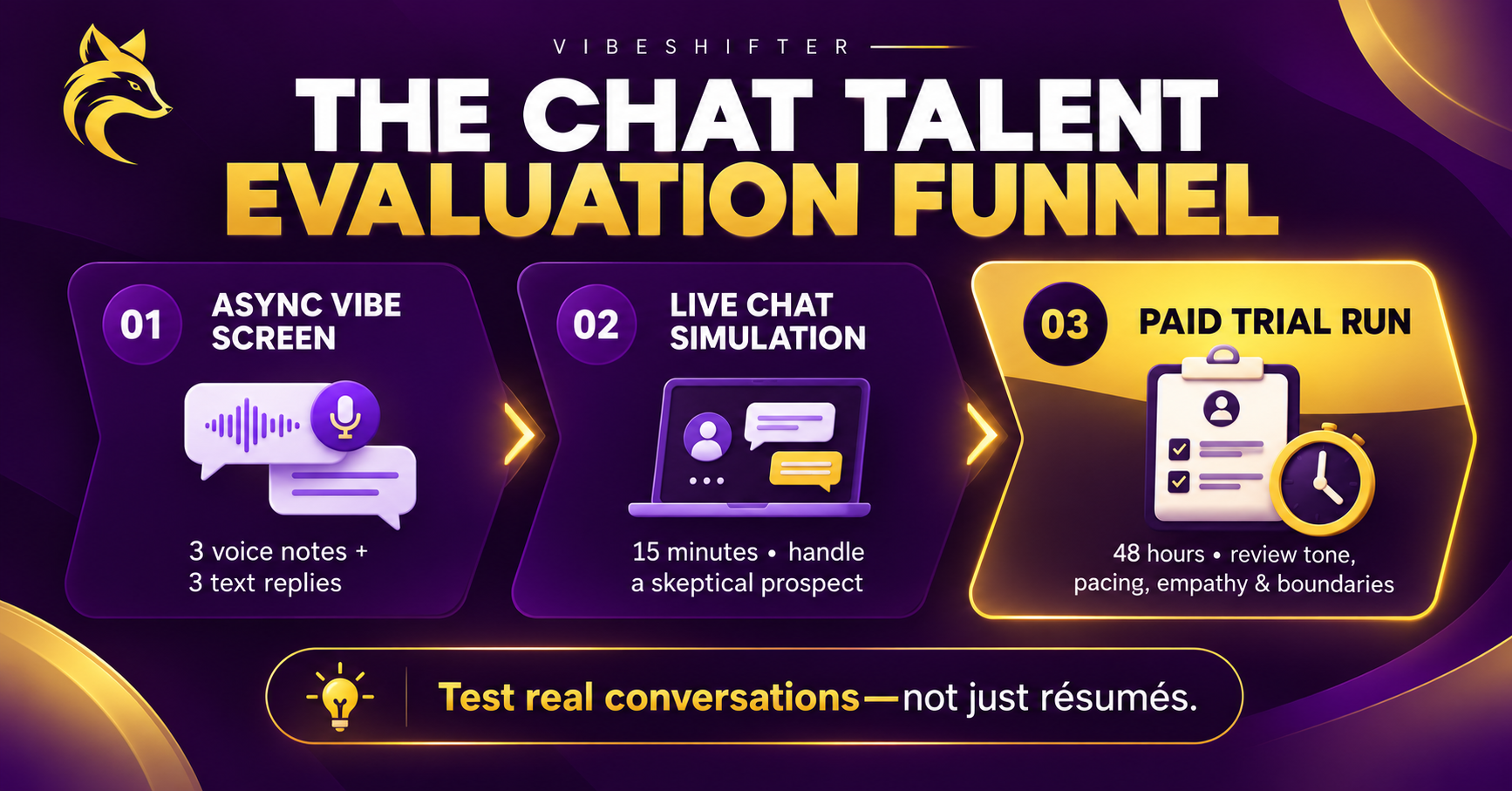
- Days 8–10: The Live Chat Roleplay. Conduct a 15-minute live simulation. Do not do a phone interview. Open a private Slack, Discord, or Telegram channel. Send them live prospect scenarios and evaluate their speed, punctuation, empathy, and closing instincts.
- Days 11–12: The 48-Hour Paid Trial. Put your top choice on a supervised 48-hour live inbox shift. Have them draft responses for your approval or handle lower-stakes inbound inquiries.
- Days 13–14: Integration & Kickoff. Review the trial metrics, lock in their permanent shift schedule, and set up your daily asynchronous check-in channel.
Measurable Next Steps & KPIs to Track
Track these three core numbers weekly. If all three are green, your chat team is printing enterprise value:
- First-Response Latency (FRL): Time elapsed between an inbound prospect message and your team's first reply. (Target: Under 15 minutes during active coverage windows).
- Conversation-to-Qualified-Lead Rate (CQL): Percentage of general inbound inquiries that turn into a structured diagnostic conversation. (Target: 35% – 50%).
- DM Close Rate: Percentage of qualified leads who purchase your membership, product, or service directly within the chat. (Target: 18% – 30% depending on price point).
The Outro: Stop Doing $15/Hour Work When You’re a 7-Figure Operator
As an entrepreneur, your highest-leverage assets are your creative vision, your strategic clarity, and your high-level relationships.
If you are spending four hours every evening manually answering messages, answering the same five questions about your community pricing, and trying to close $500 deals from your phone while your dinner gets cold, you aren’t running a business—you’ve accidentally bought yourself a frantic, low-paying customer service job.
Building a world-class conversational team isn't about giving up control. It’s about building a system where your audience is heard, respected, and served at a level of speed and warmth that you simply cannot sustain by yourself.
If you are a talented conversational specialist ready to represent the best creators online, Submit your profile to get matched with high-growth teams.
If you’re a founder, creator, or operator drowning in unread messages and ready to scale your revenue with elite, pre-vetted chat professionals, Request talent today.
At VibeShifter, we do things differently: We'll reach out privately to understand your requirements and connect suitable opportunities with the right people. No spam, no robotic proposals—just the exact talent you need to move the needle.